Resources

Decision engines

Decision rules, tables, trees and scorecards, with testing, tracing and challenger methods

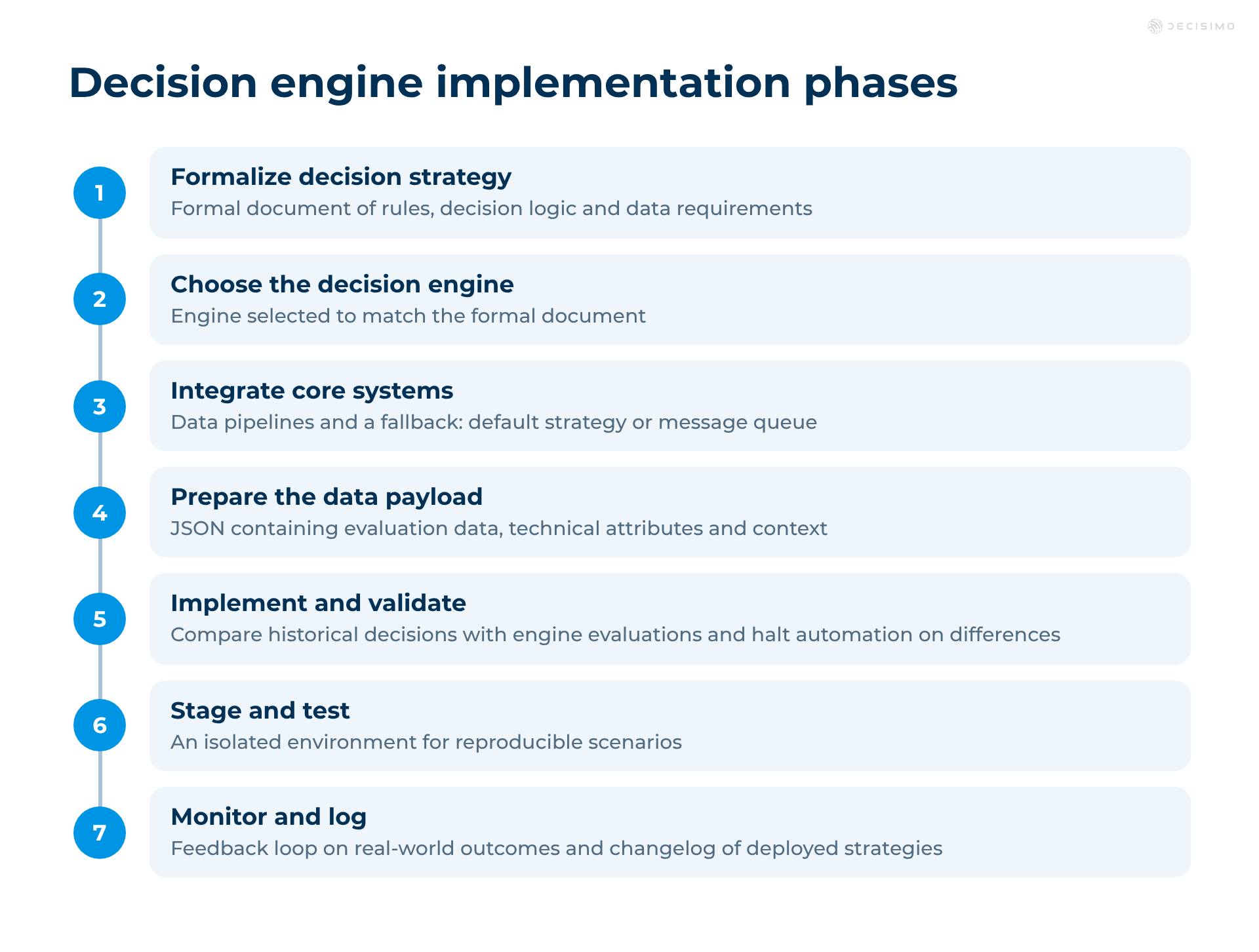
The process of implementing a decision engine

Implementing a decision engine lets companies automate and scale decision-making to reduce costs, accelerate processes, and improve efficiency. This article walks through the practical steps, from identifying candidate business processes and mapping existing decision logic and data, to formalizing a decision model, selecting the right engine, and deciding whether to use internal expertise or external consultants.
6 min read

How to test a decision table properly

Start by defining the table’s purpose. Then iterate. Draft test cases from each condition and action, run them, verify the outcomes, and refine the decision logic until it behaves predictably. Use synthetic datasets and valid value ranges when missing results are acceptable, or use exhaustive, edge-case testing, manually or with a tool, when the table must always return a result.

4 min read

The benefits of using a SaaS decision engine over a spreadsheet

A spreadsheet has no place to attach the full record of a credit decision: the rule revision, resolved inputs and person linked to the change. A decision engine stores that record with the result, preserves releases, and checks whether decision-table rows overlap or leave inputs uncaught.

6 min read

Decision-table overlap checks for policy changes

A threshold change or exception can leave the same applicant approved or referred when overlapping table rows are handled differently. A decision table can name those overlaps before release; a nested rule set offers no authoring-time comparison of its branches.

5 min read

6 reasons to use a rule engine instead of Python code

Keeping decision logic in Python can work at the start. This article outlines 6 reasons to use a rule engine instead of Python code, including maintenance, consistency, adaptability, collaboration, and integration.

3 min read

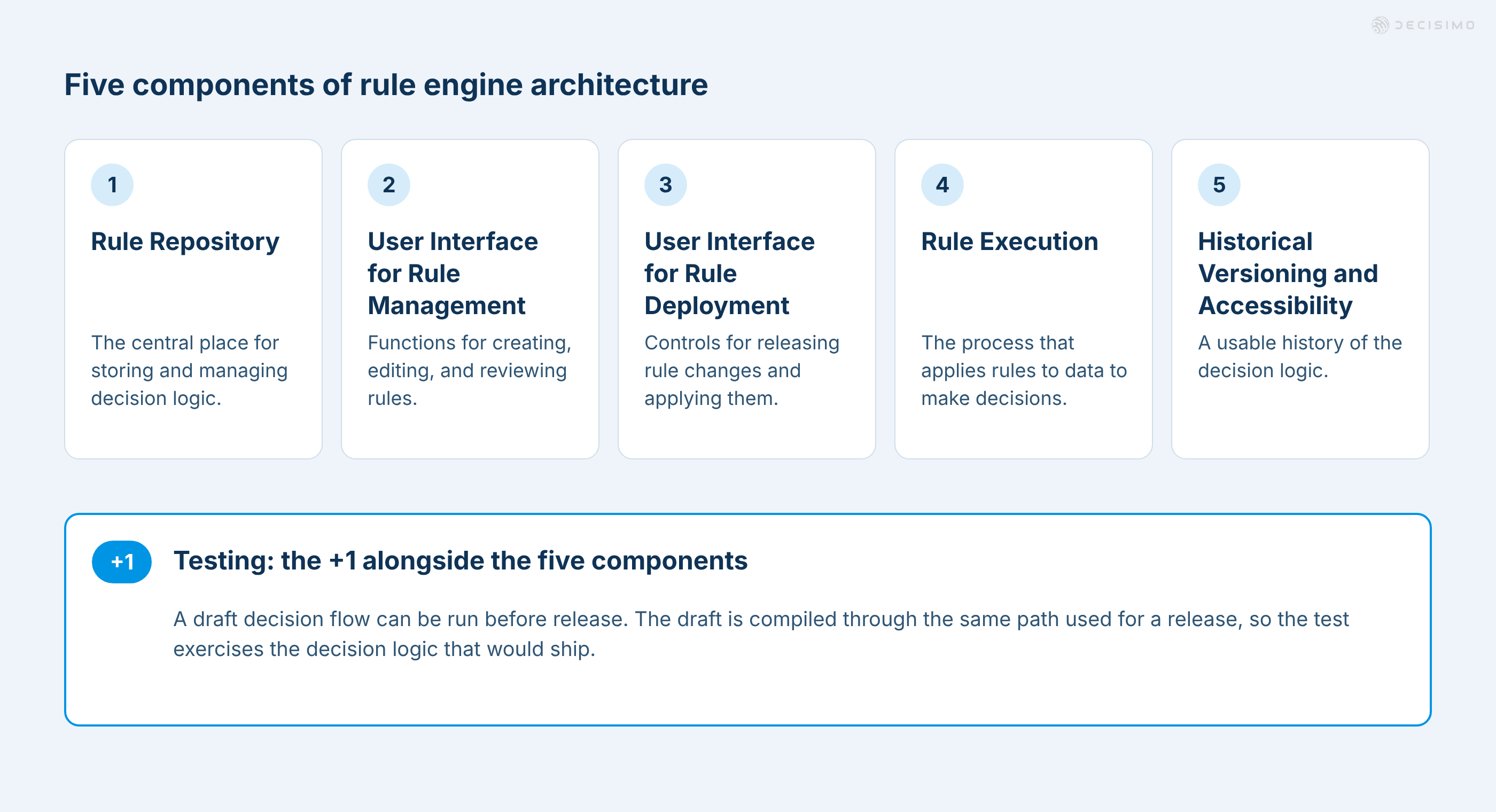
5 Rule Engine Architecture Components + Draft Testing

This article explains the five components of rule engine architecture: rule repositories, rule management, deployment interfaces, execution, and historical versioning. It also covers testing a draft decision flow before release using a saved test vector or supplied input, plus rule sets, batches, and case sandboxes.

9 min read