Decision engine demos help you decide whether to buy or build
Use six checks to compare decision engine demos and test whether an in-house proposal can deliver the same work.
Decision rules, tables, trees and scorecards, with testing, tracing and challenger methods
Use six checks to compare decision engine demos and test whether an in-house proposal can deliver the same work.
Learn how to structure a lending policy in a rules engine and check that row order, missing values and uncovered branches return the intended decision.
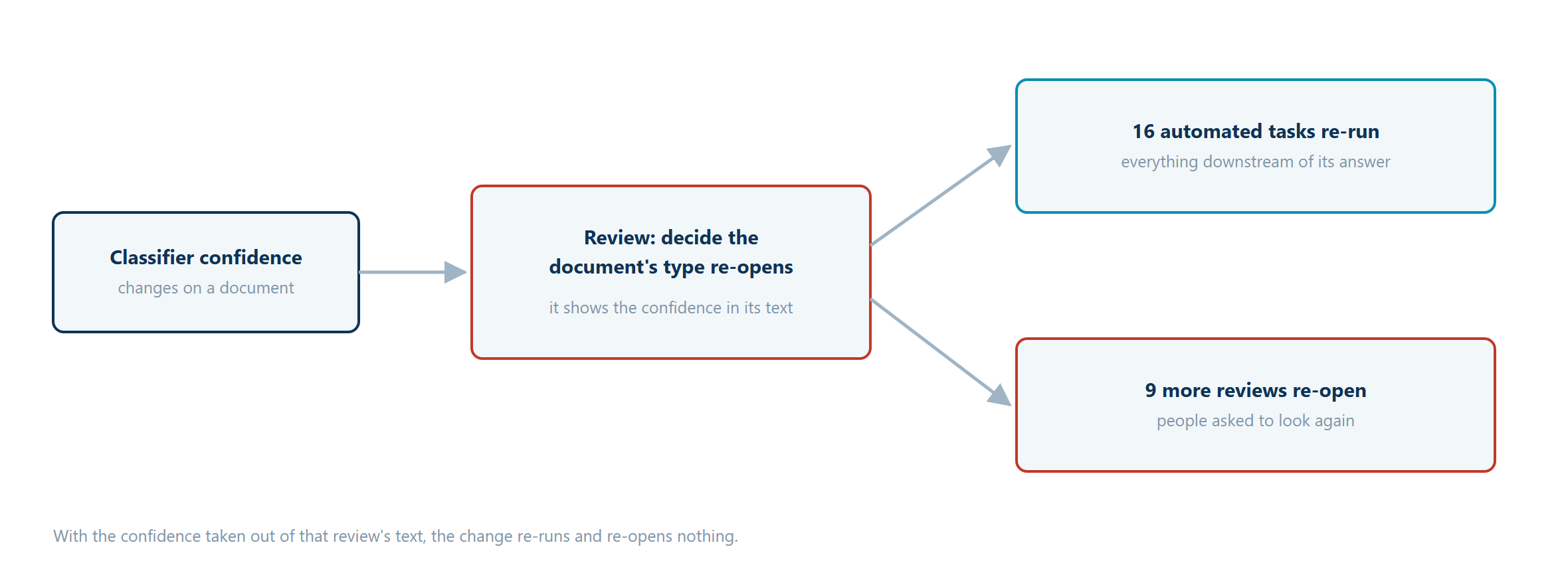
Use the changed input to see which tasks must run again and which reviews must reopen. Then set freshness on the decision that needs current data.
Decision trees and decision tables solve the same problem in different forms. Both can express decision logic, and both can be translated into each other, but they are not equally useful for every job. The right choice depends on whether you need visual segmentation, compact lookup logic, or a structure that stays readable as rules change.
Decision flows are no longer single tables or isolated rulesets. They chain rules, third-party calls, segment splits, and model steps, which makes the final outcome harder to explain unless you track decision lineage at each step.
To use a trained model in Decisimo, first package it, then define how the engine should call it. The key is simple. The model must accept the right inputs, in the right order, with the right data types, so its predictions can feed the next step in your decision flow.
Automated decision strategy is not just about getting the happy path right. It also needs to keep making safe, explainable decisions when data is missing, providers time out, or a complex decision flow fails. This article shows how to design decision logic with failover and missing data strategies built in from the start.
Adding more attributes to a model does not always improve decision quality. If predictors are poorly grouped, weakly represented, or unstable over time, they can degrade model performance and create risk for the wider decision strategy. This article explains how to manage attributes and models with stability in mind, and why binning and categorizing predictors remains a practical way to keep automated decisions explainable, traceable, and reliable.
A portfolio number moves and eight things could have caused it. Only one resolves to a yes or a no from records you already hold: whether the decision logic that approved those loans differs from the logic running now. This is how to check, what a release snapshot contains, and where the record stops.
A decision trace records every input, rule, calculation, and external call used to reach a result. It shows each stage of the decision flow and what a complete trace must capture.
This article explains how basic IF-THEN rules work in Decisimo. You will learn how rule sets run in sequence and when a condition triggers an action. It covers comparing attributes or fixed values, choosing any versus all logic, and using number, text, datetime, and regex operators to implement deterministic decision logic.
See the onboarding screens as you provide business context and describe the decision you want to automate. AI uses your inputs and documents to generate a first decision flow, which you review and test before publishing.