Vehicle history checks in European car finance
A dealer sends a rent-to-own application for a used car that has come in from another country. The applicant's side has already passed. The financier will own the vehicle for the length of the contract and take it back if the payments stop, so the remaining decision is not whether this applicant can pay. It is whether the car can be transferred, whether anyone else has a claim on it, and whether the odometer can be trusted. With the customer cleared, what does the file say about the asset you would be left holding?
The vehicle is part of the credit decision
In rent-to-own and lease-to-own, the financier owns the car until the payments are complete. The vehicle is part of the exposure: if payments stop, its condition, ownership status and history affect what the lender may recover.
The GDV describes HIS as an information system in which insurers report and enquire. An insurer may report damage settled on an expert’s report so another insurer can see that the same unrepaired damage has already been claimed. The underwriter at a car finance company is not one of the parties the GDV describes.
Choose the source by the car’s registration history
Start with the country where the car is registered, then use a second route when its earlier history crosses a border. National registers serve their own registration systems. EUCARIS links national registration authorities, including for checks before a vehicle is registered in another country.
The underwriter looks up the car in the register of the country where it is registered. The register returns only the information it holds.
Match each vehicle question to a record
Set the vehicle checks around facts that can change the decision. A transfer block, theft flag, charge, odometer concern or write-off status can affect whether the car is acceptable collateral.
- Netherlands The RDW’s public kentekencheck uses the registration plate and includes whether transfer is possible and whether a recall is open. The RDW also records odometer readings and judges the series. Its open data includes the odometer verdict codes.
- Spain The DGT’s complete vehicle report can be searched by plate, VIN or NIVE. It includes administrative data, inspection history, mileage, charges and pending recalls. The DGT vehicle report can be requested by someone other than the vehicle’s owner.
- Belgium Car-Pass records odometer history in a document. The seller must hand the Car-Pass to the buyer at a used sale, and the registration authority forwards the VIN to Car-Pass. The lender reads the odometer history from the document the dealer or seller provides.
Many Dutch-registered cars have no RDW odometer verdict
Among passenger cars first admitted from 2018 to 2022 that are still on the Dutch register, 36.9% received no odometer verdict from the RDW. The result is code 05, which can mean the car was registered abroad or received a new plate.
The share without a verdict is especially relevant to the three-to-six-year-old cars common in used-car finance. Among the cars it does judge in that cohort, about one in fifty is judged illogical.

The register now includes Belgian and German readings. Even when those readings rise, the car can remain without a verdict because its history may include another country. An illogical verdict can reflect a rollback or a typing error, so it is the RDW’s assessment of the readings, not a fraud rate.
For the underwriter, code 05 sends the odometer question to a second source or to a person.
Use a cross-border report to investigate an open question
A cross-border VIN report gives the lender another route for a car whose national record leaves a required fact unanswered. carVertical offers API access to its data, and CARFAX Europe says it gathers events from government authorities, vehicle registries and other businesses.
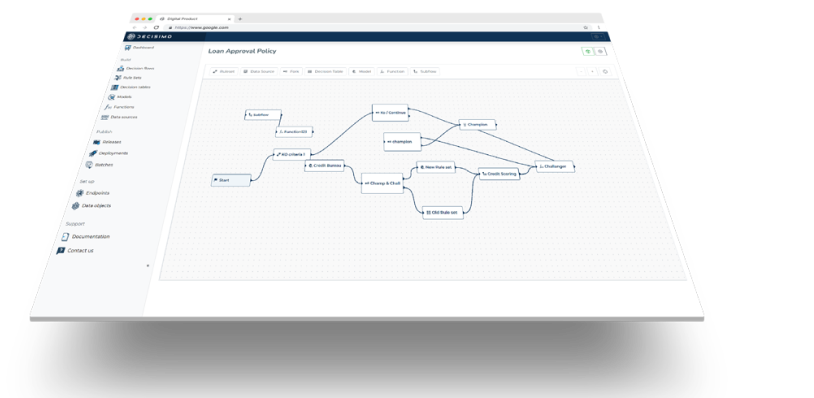
The dealer sends an imported car registered in the Netherlands, and the RDW returns code 05. The underwriter’s decision flow buys a cross-border report by VIN and reads its odometer readings under the same rule, referring the deal to a person only if the report leaves the question open.
CARFAX Europe states that some events may never have been recorded or shared, and that no provider can guarantee a complete history. Record which source answered each fact on each deal, so the decision shows the difference between a returned verdict and an unanswered question.
Set policy outcomes for stop flags and missing facts
Give the vehicle check three distinct outcomes: a stop or referral flag, a clear verdict on every required fact, and an unanswered fact. A transfer block, stolen flag, charge, illogical odometer series or write-off may be a knock-out rule. The lender sets whether each flag means decline or referral.
A clear verdict allows the vehicle side to proceed when all required facts are answered. A car with an unanswered fact that is passed goes into the book unchecked. A policy that refers every imported car sends a third of three-to-six-year-old cars to a person.
Put these vehicle rules alongside the applicant checks in the auto leasing decision flow. Then track the share of deals sent for manual review by market and by source.
Route the imported car through the vehicle policy
For the dealer's imported car, the underwriter sets the route in this order.
- List the vehicle facts that can stop or refer a deal on their own, including transfer or theft flags, charges, an illogical odometer series and write-off status.
- At application, pull the national record for the car’s country of registration by plate or VIN where that source supports it. Use the RDW check in the Netherlands, the complete DGT report in Spain, or the Car-Pass odometer document in Belgium.
- Set the policy to decline or refer on a stop flag. Approve the vehicle side only when every required fact has a clear verdict.
- Keep no verdict as its own outcome. In the Netherlands, code 05 can mean the car was registered abroad or received a new plate.
- For an unanswered fact, obtain a cross-border VIN report through an API where available and apply the same rules to its results. Refer the deal if a required fact remains open.
- Record which source answered each fact on each deal.
- Count deals with no verdict by market and source. That share shows how many deals a person will see.
Frequently asked questions
Is there a European database to check a car’s history by VIN?
No. National registers hold records within their own systems, EUCARIS links registration authorities, and commercial providers offer cross-border VIN reports.
Can a lender use the insurers’ vehicle database?
The GDV describes HIS as a system in which insurers report and insurers enquire, and describes no route for lenders. In the UK, the insurers’ record of written-off and stolen vehicles is available to authorised professionals, and provenance companies are data recipients, so a lender can see it through a provenance company's check.
What does a vehicle history check show?
A check may return transfer or administrative flags, odometer readings, charges, inspection history or recalls, and cross-border reports can add other recorded events.
How does a car history check fit into a car finance approval?
Assess the vehicle results alongside the applicant’s file. A stop flag can lead to decline or referral, and the vehicle side can proceed when every required fact has a clear verdict.
Why does the vehicle matter in rent-to-own?
The financier owns the car until the payments are complete, so the vehicle is an asset the financier may take back if payments stop.
How reliable is a vehicle history report?
A report is as complete as the records its sources hold. CARFAX Europe says no provider can guarantee a complete history. In the Dutch register, a third of three-to-six-year-old cars carry no odometer verdict because their history is abroad.
