Reinsurance treaty terms as decision tables
The annual account for the homeowners quota share is open in front of you, showing one loss ratio for the first contract year and the adjusted commission worked out from the scale printed in the contract. The cedent's technical accountant has sent it at year-end, and your share is on the slip with the other reinsurers. Before you agree the figure, you open your own signed endorsement to the contract. The account gives you a loss ratio and a commission. The endorsement is what you are checking against it. Which scale was this figure calculated on?
Compare the account with your signed endorsement
On the 2013 Homeowners of America quota share, the same loss ratio can produce different commissions across the reinsurers on the slip. To see the difference, compare the printed scale with the scales attached to each share. The decision table makes that comparison explicit: the loss ratio selects a band, and the band returns a commission and any carry forward.
All five give the same commission from 40% to 47%. Above 47% Arch and SCOR fall below the printed scale first, and above 57% Endurance and Everest follow, so the lines are apart across the range where a quota share is expected to run. Below 40%, Arch’s scale stops at 35%, but the others reach 38%.

| reinsurer | share | own scale | adjusted commission | carried forward |
|---|---|---|---|---|
| Arch | 24.0% | yes | 20.5% | 1 point |
| Endurance | 10.0% | yes | 22.0% | 1 point |
| Everest | 20.0% | yes | 22.25% | none |
| SCOR | 10.0% | yes | 21.5% | 3 points |
| Taiping | 3.0% | no, printed | 23.0% | 3 points |
The printed scale gives you one answer for the contract, but your endorsement determines the answer for your share. Weighted by share, the slip pays 21.51% at a 60% loss ratio, compared with 23.0% under the printed scale.
Each endorsement sets its commission
Arch, Endurance, Everest and SCOR each signed their own scale, covering 64 of the 67 placed points. Only Everest’s 2014 agreement replaced the printed scale, with bands different from its 2013 scale. At a 60% loss ratio in 2014, Everest’s share gets 24.0% with nothing carried forward. Every other reinsurer gets 25.0% and carries 5 points forward.
A carry forward brings a prior excess loss or shortfall into the current year’s calculation, shifting the scale by the carried amount. At a 60% loss ratio in 2013, Taiping’s share on the printed scale carries the 3 points above 57.0%, times earned premium, into next year as a debit to losses incurred. Everest’s scale carries nothing until the loss ratio passes 63.0%. David R. Clark’s reinsurance pricing study note explains why the expected commission depends on the distribution of loss experience, not just one expected loss ratio.
Treaty conditions determine which risks are ceded
The 2014 Homeowners of America contract covers Dwelling Fire and Homeowners business, follows the territorial limits of the company’s policies, and sets a maximum total insured value for one property risk. Put the terms that determine acceptance into the table:
- Class of business covered.
- Territory where the risk is located.
- Size cap for one risk.
- Exclusions and the exceptions written into them.
A home fails the size condition if the total insured value of its dwelling, other structures, contents, and loss of use together exceeds the $1,612,500 cap. A flood policy written as such fails exclusion 13. Both go to special acceptance, not to a silent decline.
Of its sixteen exclusions, the contract waives eleven automatically when, in the cedent’s opinion, the excluded exposure is incidental to the principal exposure. The five exclusions the waiver cannot lift are financial guarantee and insolvency, nuclear, war, insolvency funds, and terrorism.
You should record the exceptions beside the exclusions: the pools exclusion does not apply to residual market plans such as FAIR plans and coastal pools, and the insolvency funds exclusion does not apply to Texas guaranty association assessments.
Special acceptance depends on recorded agreement
The cedent can request special acceptance for business outside the treaty’s terms, except under those same five exclusions. As a subscribing reinsurer, you have ten days to accept, request more information, or reject an eligible request. If you do not answer within that period, you are deemed to have agreed.
Record each reinsurer’s response and share. Agreement by reinsurers whose shares total more than 50.0% binds all subscribing reinsurers. When the agreeing shares total 50.0% or less, the acceptance applies only to the reinsurers that agreed.
Calculate commission separately for each band
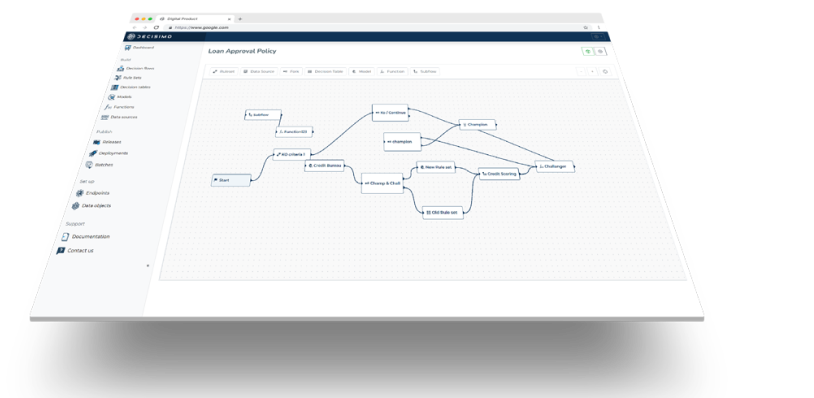
You set the table to pick the band from the loss ratio and use a function to compute the commission from the band’s base, slope, and pivot.
For example, the SCOR scale in 2013 uses a base commission of 21.5% and a slope of 65% in the 47% to 57% band. The calculation is 21.5% + 65% × (57% − 55%) = 22.8%.
Two of the contract’s bands both match at a shared edge. The decision table checker shows you where two rows overlap and where a loss ratio gets no result.
Reconcile ceded risks and commissions against the treaty
At year-end, check the account sent by the cedent’s technical accountant against the acceptance result for the risks and the commission scale attached to your share.
- Transcribe the contract’s class, territory, size cap, exclusions, and applicable exceptions into an acceptance table, with one row per condition. Mark the exclusions the incidental waiver cannot lift.
- For each risk on the premium bordereau, compare its class, location, and insured value with the relevant table conditions. A risk outside the terms goes to special acceptance unless one of the five exclusions bars it.
- Record each special acceptance against the reinsurers that agreed, including any deemed agreement after the contract’s response period. Treat it as binding on all subscribing reinsurers only when agreeing shares total more than 50.0%.
- Transcribe each reinsurer’s sliding scale from its endorsement. Put each band, base, slope, pivot, and carry-forward threshold in its own row.
- Set the table to stop at the first matching row, highest loss ratio first.
- Check every band edge, confirming that matching rows return the same commission at shared edges and every loss ratio has a result.
- Run the year’s loss ratio through each reinsurer’s table. Compare the resulting commissions and carry forwards with the cedent’s account before agreeing the figure.
Questions about commission and treaty acceptance
What is a sliding scale commission in reinsurance?
It is a ceding commission that varies with the loss ratio under the reinsurance agreement. The slide is not always one to one. Clark’s study note prices the scale over possible loss ratios, with a 31% average commission against 25% at a 65% expected loss ratio.
Can reinsurers on the same treaty have different commission terms?
Yes. On the 2013 Homeowners of America quota share, four of five reinsurers replaced the printed scale, and in 2014 only Everest did, with different bands from 2013. Check the endorsement for each reinsurer’s share.
How do you check a bordereau against the treaty terms?
You run each risk’s class, location, and total insured value through the acceptance table and send what fails to special acceptance.
What happens to a risk that falls outside the treaty?
The cedent may ask for special acceptance. Each reinsurer has ten days to respond, and silence counts as agreement. Agreement by reinsurers holding more than half the placed share binds all subscribing reinsurers. When agreeing shares total 50.0% or less, the acceptance applies only to reinsurers that agreed. A risk that no reinsurer on the treaty accepts is the kind of risk for which facultative cover is negotiated, one risk at a time, and the reinsurer may refuse it.
How does a carry forward change the sliding scale?
It brings a prior year’s excess loss or shortfall into the current year’s calculation, shifting the scale by the carried amount. A 5 point carry forward moves every band edge down by 5 points.
What is the difference between treaty and facultative reinsurance?
Facultative reinsurance is negotiated for each risk, and the reinsurer may refuse any submission. Under a treaty, the cedent must cede every risk within the treaty’s terms, and the reinsurer must accept it.
