7 Steps to Replace Manual Underwriting with Automated Decision Logic
Manual underwriting plays an important role in the credit approval process, especially for applicants with unusual or complex financial situations.
But it takes time and adds cost for both lenders and applicants.
Advances in data and platforms now automate large parts of credit approval. This reduces manual work. In this article, we cover how to select a rule engine and implement rules to streamline the credit approval process.
1. Identify and document existing manual underwriting rules
The first step in automating credit approval is to identify and document the rules used in manual underwriting. Include guidelines for evaluating credit history, income, debt levels, and other factors that affect creditworthiness. Clear documentation makes the rules easier to understand and ready to translate into an automated system.
2. Categorize and prioritize rules
Once you document the rules, group them by importance and relevance to approval outcomes. This helps you decide which rules to implement first, and which to modify or replace during automation.
3. Select a rule engine that fits your needs
With the rules defined and prioritized, choose a rule engine that can process and evaluate your criteria. Consider ease of integration, scale, adaptability to changing regulations and industry standards, and the ability to handle complex rules and conditions.
4. Implement rules in the selected rule engine
After selecting the rule engine, translate the documented rules into its format. Build tests, validate outcomes, and confirm the rules behave as expected before moving forward.
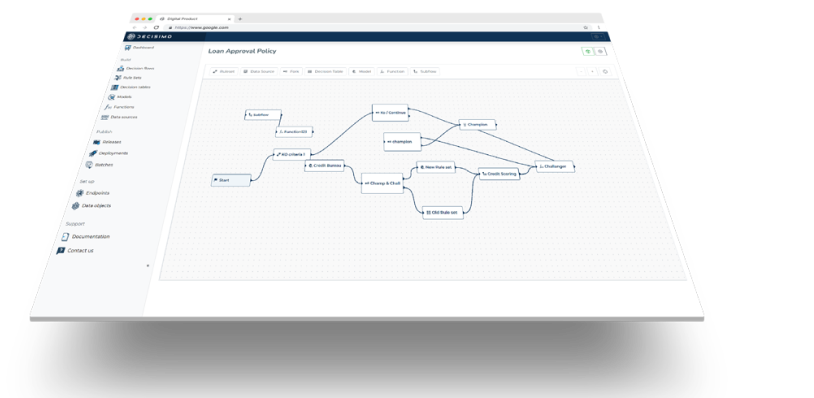
5. Integrate the rule engine into the credit approval process
With rules implemented in the rule engine, integrate it into the credit approval flow. Include collection and analysis of relevant data, such as credit scores, income statements, bank statements, employment history, and other financial inputs. The rule engine then evaluates the applicant's creditworthiness based on the established rules.
6. Ensure data quality and accuracy
Accurate automation depends on clean data. Use data cleansing and validation tools, and run regular audits to identify and fix errors or discrepancies.
7. Continuously monitor and update rules
Keep rules current to maintain relevance and effectiveness. Add new data sources, adjust the rule engine's logic, and reevaluate the factors used to assess creditworthiness.
In conclusion, by selecting a suitable rule engine and implementing existing manual rules, lenders can streamline the credit approval process. They can maintain the quality and accuracy of credit decisions. This approach supports a practical transition to an automated system, benefiting both lenders and applicants.
Frequently asked questions
Which underwriting rules should I automate first?
Start with high-volume rules that have clear inputs and consistent outcomes, such as eligibility checks or straightforward affordability thresholds. Keep exceptions that depend on judgment or incomplete evidence for trained underwriter review until you can define the criteria, record the reason for referral, and test the policy against actual applications.
How should I set the cutoff for referring an application to manual review?
Set referral criteria around specific uncertainty or missing evidence, not around a single score chosen in isolation. Use application volumes and review capacity to size the referral band, then check whether an underwriter can get information that could change the outcome. A narrow band may miss difficult cases, while a broad one can recreate the queue you meant to reduce.
How should I test automated credit rules before launch?
Replay historical applications against the proposed rules, then compare decisions and reasons with the policy you approved. Test each cutoff, boundary values, missing or conflicting inputs, and every referral path, and review results across relevant applicant groups for unexpected differences. Historical replay cannot establish future performance, so keep a controlled review of live decisions after launch.
How often should I review automated credit decisions after launch?
Review approval rates, referrals, missing inputs, and underwriter overrides weekly during the initial launch period, then at least monthly once results are stable. Track repayment outcomes as they mature, since early approval figures do not show whether credit quality is holding. Recheck sooner after a material change to the rules, data sources, or applicant mix.
What should determine which decision logic platform I choose, and what costs should I compare?
Compare the full operating cost: integration, licensing, policy changes, testing, and the staff time needed to maintain the rules. Check that the platform supports the decision tables or rule sets your policy needs, gives the team revision history and test results, and fits your existing data connections. A low license price can cost more if every policy change needs specialist development.
