Published on: 2024-08-10 18:48:28
Get started with Decisimo in 3 steps
Decisimo now uses a guided onboarding flow.
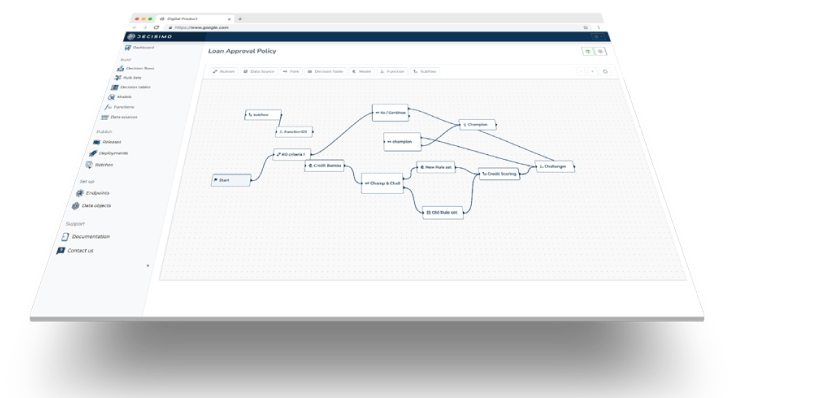
Tell us about your business, describe the decision you want to automate, and upload any existing policy or decision logic documents. Decisimo uses that input to generate your first decision flow.
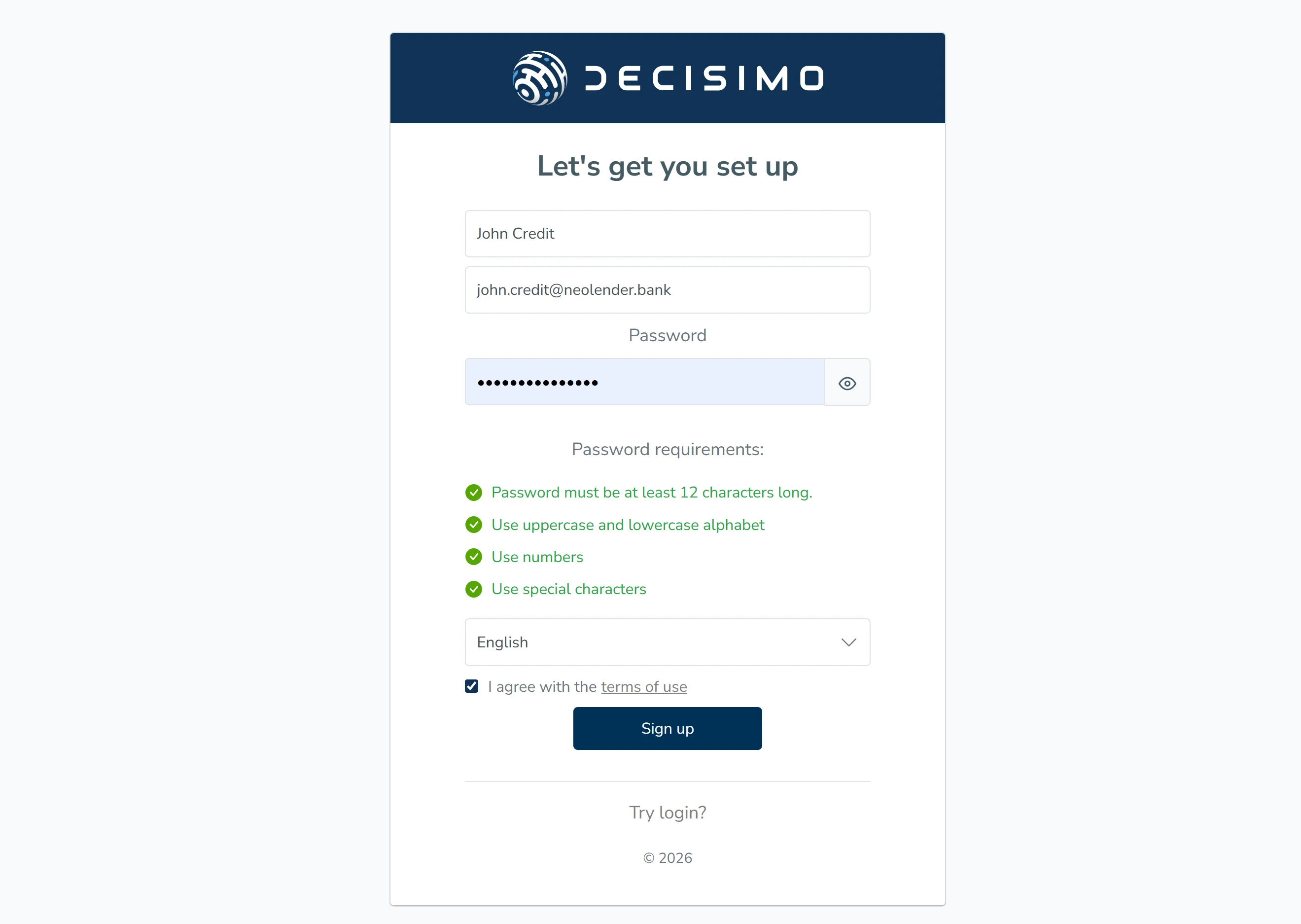
1. Tell us about your business
Start with the basics so Decisimo can tailor the setup to your use case.
- Select your country
- Choose your company size
- Estimate your monthly decision volume
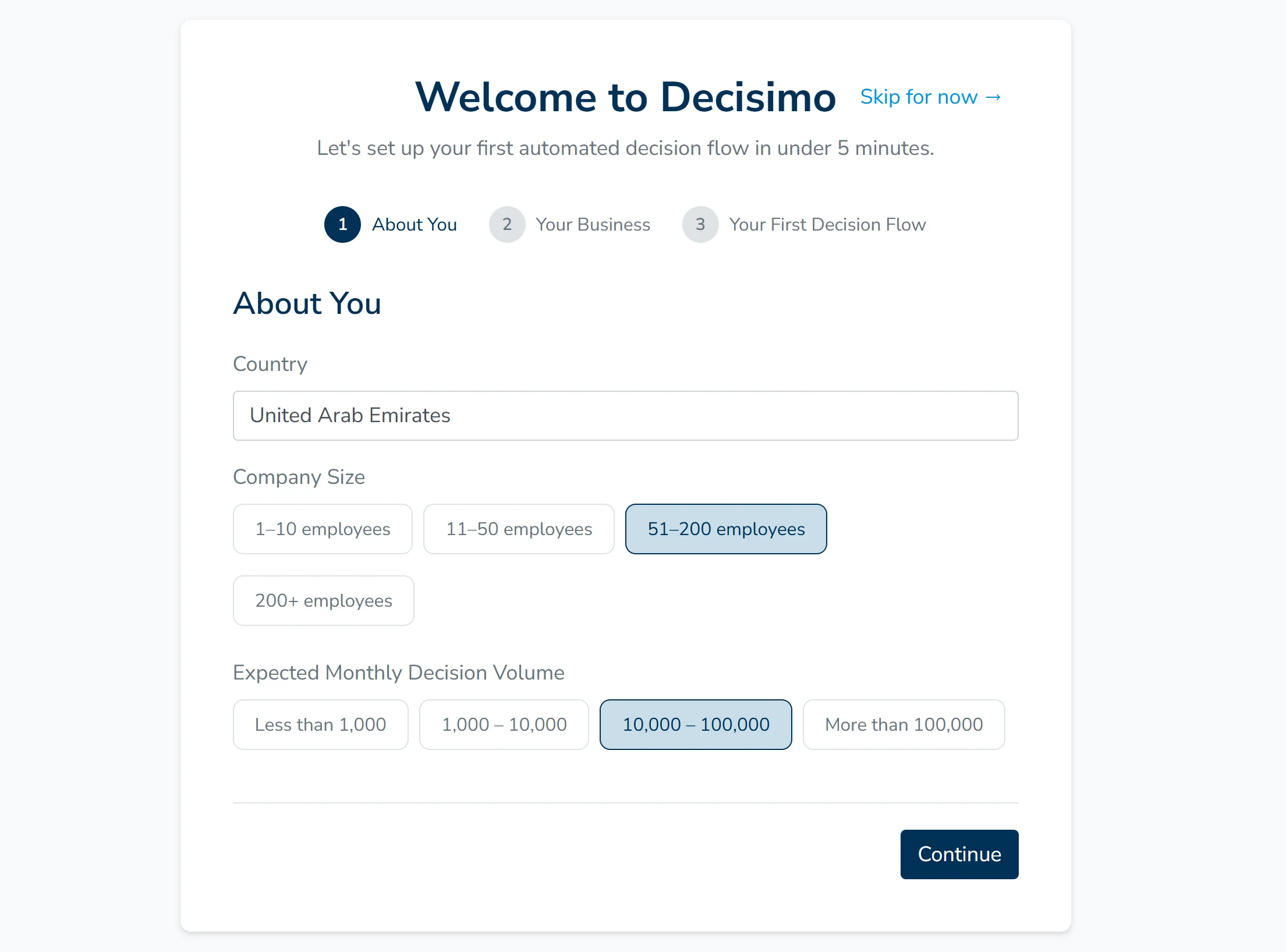
- Pick your industry
- Add your business model
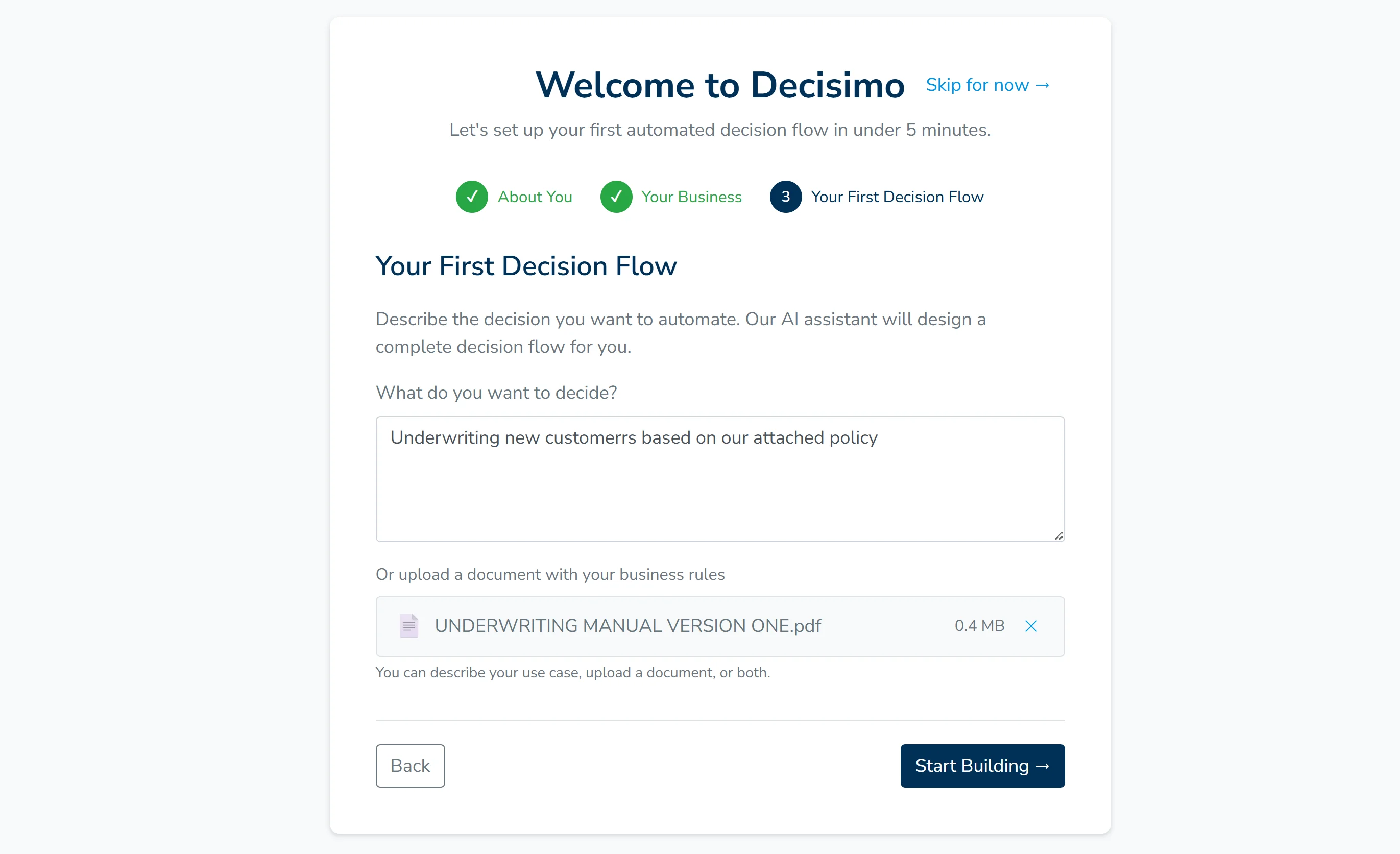
2. Describe the decision you want to automate
Explain what your flow should decide.
For example:
- underwriting new customers
- loan approvals
- fraud checks
- pricing decisions
- eligibility checks
You can also upload supporting material, such as:
- credit policy
- underwriting manual
- decision tree
- rule document
- other internal logic documentation
3. Let AI build your first flow
Decisimo AI uses your inputs and documents to generate the first version of your decision flow.
From there, you can:
- review the generated logic
- adjust rules and decision tables
- add integrations or models
- test the flow
- publish it to staging or production
Related Articles
-
Decision Engineer: role, skills, and impact in automated decision making
A decision engineer designs and builds decision models that automate decision logic while keeping outcomes transparent, explainable, and aligned with business goals. This article covers the technical skills, including data analytics, programming, and machine learning, and the soft skills, including domain awareness, clear communication, and problem solving, needed to design and deploy reliable automated decision-making.
-
Decision Engine 101: How and Why to Choose the Right One
Choosing a decision engine means comparing decision logic, deployment model, and the level of control you need. This article breaks down the main types of engines, the trade-offs between cloud and on-premise, and the core features that matter when you evaluate one for your stack.
-
Building Anti-Fraud Competency Without Losing Control of Your Data
Anti-fraud is not a product you install once and forget. It is an operating capability built from data, decision logic, traceability, and continuous tuning across the customer journey. Companies can buy parts of that stack, but if they outsource the core logic and enriched data, they often create a lock-in problem that is hard to unwind later.
-
How Decision Making Evolved
Decision logic moved from hard-coded if-then rules to predictive, data-led methods. Early systems were rigid. Requirements moved faster than code, so static rules fell behind. This article explains that shift, the rise of LLMs and agentic workflows, and why deterministic, replayable decisions still matter in finance and insurance.
-
Evaluating the ROI of Moving to a Decision Engine for Risk Management
This article breaks down the ROI of moving risk management from hard-coded logic to a decision engine. It uses a Latin America-based lending company to compare current development costs, deployment speed, and explainability against a more flexible decision workflow.