Decision engine for customer segmentation in marketing
Published on: 2024-08-10 18:38:37
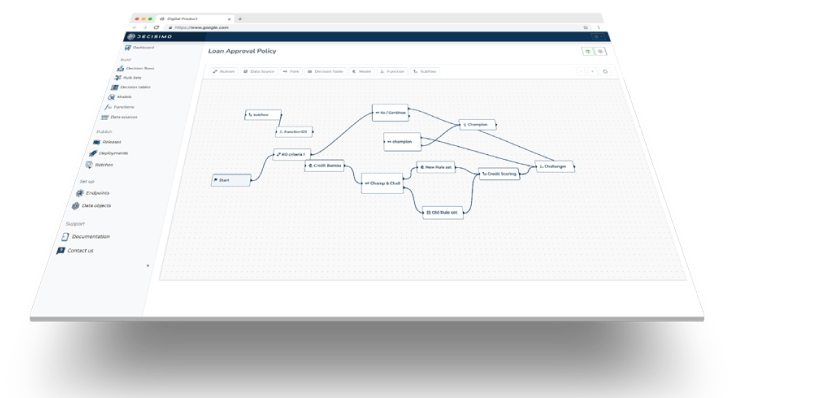
Decision engines are useful for customer segmentation in marketing. A decision engine is a platform that lets users define rules for a specific application, then apply those rules automatically to incoming data.
In marketing, a decision engine can segment customers based on different criteria, such as demographics, behavior, or purchase history.
Extending customer lifetime value through targeted marketing
One of the main benefits of using a decision engine for customer segmentation is that it helps businesses extend customer lifetime value.
By segmenting customers based on demographics, behavior, or purchase history, businesses can create targeted marketing campaigns designed for each customer segment.
This helps businesses retain customers longer and increase the revenue generated from each customer.
Examples of Offers that Increase Customer Lifetime Value
- Exclusive access to new products or services before public release
- Discounts or promotions on products or services the customer has shown interest in
- Personalized recommendations based on the customer's purchase history or behavior
- Loyalty rewards or points that can be redeemed for discounts or free products or services
- Special events or experiences, such as private sales or VIP treatment at a physical store or event.
Providing customers with specific offers based on demographics and behavior
Another benefit of using a decision engine for customer segmentation is that it helps businesses give customers specific offers based on their demographics or behavior.
For example, a business could use a decision engine to identify customers who are likely to be interested in a specific product or service, then send targeted offers for that product or service.
This can increase the chance that customers respond to those offers and, in turn, drive more sales and revenue.
Scoring customers based on their propensity to buy
In addition to extending customer lifetime value and giving specific offers, a decision engine can also score customers based on their propensity to buy.
By analyzing customer data and applying rules that identify key indicators of purchasing behavior, businesses can create a score that reflects how likely a customer is to make a purchase.
This helps businesses prioritize marketing efforts and focus on customers who are most likely to buy.
Attributes for Scoring Customers for Propensity to Buy
- Total lifetime spend
- Number of purchases made
- Average purchase amount
- Time since last purchase
- Number of visits to website or physical store
- Engagement with marketing emails or advertisements
- Number of referrals or customer referrals
- Response to past offers or promotions
- Product or category interests
- Demographic information, such as age, gender, or income level.
Using decision engines for cross-selling and upselling
Another use of a decision engine in customer segmentation is cross-selling and upselling. By segmenting customers based on purchase history and behavior, businesses can identify opportunities to offer related products or services.
For example, if a customer has recently purchased a laptop, a business could use a decision engine to identify other products or services that may interest that customer, such as a laptop case or an extended warranty. This helps businesses increase revenue per customer and improve the overall customer experience.
Real-time segmentation during inbound calls
Finally, a decision engine can also segment customers in real time during inbound calls.
By applying rules to customer data as it is received, businesses can quickly identify the segment a customer belongs to, then adjust their marketing efforts accordingly.
This helps businesses provide a more personalized experience for each customer and drive more sales and revenue.
Examples of Rules for Customer Segmentation in Inbound Marketing
- Customers who have called in the last 30 minutes
- Customers who have not made a purchase in the last 90 days
- Customers who have a high churn rate probability
- Customers who have a high propensity to make a purchase
- Customers who have recently complained about a product or service
Regular Batch Processing for Evaluating All Customers
One of the main benefits of using a decision engine for customer segmentation is the ability to evaluate all customers regularly through batch processing.
By defining rules that are applied to customer data in a batch process, businesses can gain useful insights into customer characteristics and behavior.
This helps businesses identify trends and patterns and use that information to improve their marketing efforts.
Optimizing Customer Segmentation for Business Growth
In addition, regularly segmenting customers this way helps businesses keep customer data up to date and accurate, so they target the right customers with the right offers.
By evaluating all customers regularly through batch processing, businesses can improve marketing efforts and drive more sales and revenue.
Examples of Rules for Customer Segmentation in Batch Processing for Marketing
- Customers who have made a purchase in the last 30 days
- Customers who have not made a purchase in the last 90 days
- Customers who have a total lifetime spend of more than $1,000
- Customers who have shown interest in a specific product or product category
- Customers who live in a particular geographic region or demographic group
Conclusion
Overall, using a decision engine for customer segmentation in marketing gives businesses several benefits, including extending customer lifetime value, giving specific offers based on demographics or behavior, scoring customers based on their propensity to buy, and supporting cross-selling and upselling.
By segmenting customers regularly, either in real time during inbound calls or through batch processing, businesses can gain better insight into their customers and improve their marketing efforts.