Using adverse media analysis in KYB and KYC screening
Why adverse media matters in KYB and KYC
Adverse media is one of the few controls that can surface risk before it shows up in losses, fraud cases, or regulatory findings. In KYB and KYC, it helps teams identify signals tied to criminal activity, regulatory action, corruption, sanctions evasion, fraud, and other negative events that may not appear in structured data sources.
The problem is not the concept. It is the process.
Teams often rely on manual search, inconsistent keyword rules, and ad hoc reviews. That creates three failures: missed risk, false positives, and no audit trail. A stronger approach uses a decision flow with two stages. First, flag potentially relevant results quickly. Then, analyze only the flagged items in depth, using the article text, structured prompts, and traceable outputs.
A practical process for adverse media screening
The best design is not a single model that tries to solve everything. It is a chain of deterministic steps. Each step has a clear purpose, clear inputs, and a clear output. That gives you explainability, easier tuning, and better case management.
1. Search widely, then narrow with rules
Start with search coverage. SerpApi can retrieve Google Search results and Google News results for a subject, which gives you a broad first pass over possible mentions. That is useful because adverse media does not live in one source type. It appears in news articles, local reporting, press coverage, and indexed pages that may not be obvious from one search query.
At this stage, the objective is not to prove relevance. It is to gather candidates. Use names, aliases, company names, directors, UBOs, and other known identifiers. Then run keyword-based filters to flag likely adverse items. Keywords can include terms tied to fraud, arrest, indictment, bribery, investigation, money laundering, tax evasion, and political exposure, depending on your policy.
This first pass should be intentionally broad. If it is too narrow, you miss signals. If it is too loose, you overwhelm the review queue. The right balance depends on your risk appetite and the population you screen.
2. Use keyword logicfor deterministic flagging
Keyword logic still matters. It is fast, transparent, and easy to audit. You can explain why a result was flagged. You do not need to invoke a black box. That matters in regulated screening.
Typical rules include:
- Exact name match plus adverse keyword in title or snippet
- Company name plus enforcement or investigation terms
- Person name plus crime category terms
- Jurisdiction-specific terms for local-language screening
- Recency thresholds to prioritize current risk
These rules do not decide the case. They decide which results deserve deeper review. That separation keeps the process deterministic and easier to maintain.
Why LLMs belong in the second stage
Keyword matching alone cannot tell you whether a result is actually about the subject. It cannot distinguish between two people with the same name. It cannot tell whether an article is about a criminal allegation, a political appointment, or a completely unrelated event that happens to share a keyword.
That is where LLMs are useful. Not as the first gate. As the second-stage analyzer.
Used correctly, an LLM can read the article, extract the relevant facts, classify the category, and return a structured response. The prompt should force the model to answer a closed set of questions. For example:
- Is this article about the screened entity?
- Is the match likely a same-name false positive?
- Which adverse category applies, if any?
- What evidence in the article supports that conclusion?
- Should this be escalated for manual review?
The output should be structured. JSON works well. So do fixed fields like match_status, risk_category, confidence, summary, and supporting_quotes. This makes the result usable inside a case management flow without extra parsing or guesswork.
How to separate real risk from same-name noise
Same-name false positives are one of the main problems in adverse media screening. A search result may contain the right name, but the wrong person. In practice, that happens often. Common names, transliterations, and partial matches increase the noise.
A good process uses several checks in sequence:
- Name and identifier comparison. Check age, location, employer, company registration data, title, and known associates.
- Article context. Read the full article, not just the snippet or headline.
- Entity resolution. Compare references in the text against your customer or counterparty record.
- Category assignment. Decide whether the event is criminal, political, legal, commercial, or irrelevant.
- Escalation logic. Route only uncertain or high-risk cases to human review.
LLMs help most when they are constrained to evidence-based outputs. They should not invent facts. They should summarize what is present, identify uncertainty, and say when the article does not support a match.
Why crawling the full article improves accuracy
Search snippets are not enough. They often omit the details that determine relevance. SerpApi gives you the links, which lets you retrieve the full article and run deeper analysis on the text itself. That improves precision in three ways.
First, you can see the full context around the name mention. Second, you can inspect whether the story is about an allegation, a conviction, a lawsuit, an appointment, or another event. Third, you can extract supporting sentences for the case file.
This deeper pass should only run on flagged items. That keeps cost and latency under control. It also reduces unnecessary crawling. The architecture is simple: search, flag, enrich, analyze, summarize, store.
When you crawl the article, normalize the text before analysis. Strip navigation clutter, boilerplate, and duplicate content. Then send only the relevant body text to the model. If the article is long, chunk it and merge the outputs through a deterministic aggregation step.
A two-stage decision flow for adverse media
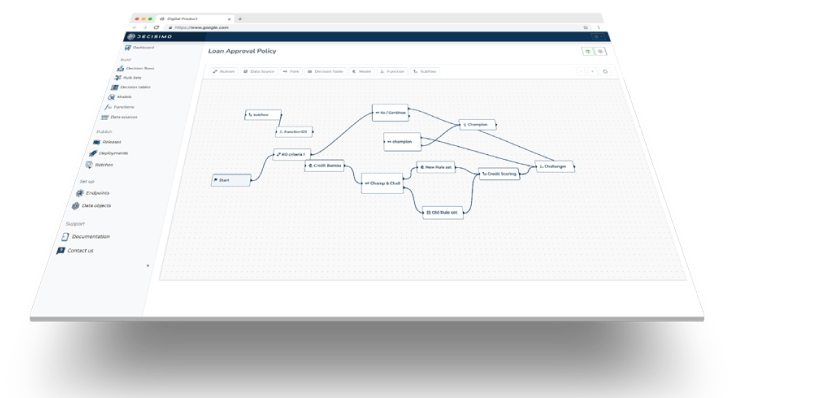
In practice, the decision logic should look like this:
- Stage 1: Search the web and news sources for the entity.
- Stage 2: Apply deterministic keyword rules to flag candidates.
- Stage 3: For flagged candidates, fetch the full article text.
- Stage 4: Use an LLM with a structured prompt to classify relevance and category.
- Stage 5: Produce a summary for case management with evidence, confidence, and rationale.
- Stage 6: Escalate uncertain or high-severity cases to a human analyst.
This sequence avoids the common trap of asking a model to do both retrieval and judgment at once. It also makes tuning easier. You can improve search terms, keyword lists, prompt design, and thresholds independently.
What the structured response should contain
If you want the output to support operations, the schema must be strict. Free text alone is not enough. A useful response can include:
- entity_match: yes, no, or uncertain
- match_type: exact, partial, same-name, alias, or unrelated
- risk_category: criminal activity, politics, sanctions, fraud, litigation, regulatory, or other
- severity: low, medium, high
- confidence: numeric score or fixed band
- summary: 2–4 sentences in plain language
- evidence: quoted passages from the article
- recommended_action: clear, review, or escalate
This structure turns an article into a case artifact. Analysts can review it quickly. Auditors can trace it. Product teams can monitor outcomes. And the rules behind the process stay visible.
Controls that matter in regulated screening
Adverse media screening touches compliance, risk, and operations. That means controls matter as much as coverage.
You need a full decision trace. Log the search terms, the source URLs, the keyword rule that fired, the model version, the prompt version, and the final classification. If the result changes later, you need to know why.
You also need version control for keywords and prompts. A small prompt change can shift classification behavior. A keyword update can change the queue size. Treat both as governed rulesets, not casual edits.
Finally, keep human review in the loop for ambiguous cases. The model should decrease the work done manually, not replace accountability.
Common implementation mistakes
Teams usually fail in the same places:
- They rely on headline snippets and never read the full article.
- They use one giant prompt for every case, regardless of category.
- They do not separate flagging from final judgment.
- They store only the final answer and lose the evidence trail.
- They ignore same-name ambiguity and treat all matches as real.
Each of these errors creates avoidable noise or missed risk. The fix is a staged process with explicit rules and traceable outputs.
How this fits into a broader KYB/KYC stack
Adverse media should not sit in isolation. It should sit alongside identity checks, sanctions screening, company registry data, UBO verification, device intelligence, and fraud signals. Together, these sources create a stronger view of the entity and its risk profile.
That is especially important in KYB, where company officers, shareholders, and related entities may all matter. A single adverse article about a director may change the case outcome even if the company record itself looks clean.
For KYC, the value is similar. A person may pass basic onboarding checks and still carry media risk that deserves review. The process should catch that. Analysts should not have to read hundreds of irrelevant search results.
Summary
Adverse media analysis works best when it is treated as a decision flow, not a single model task. Use SerpApi to gather Google Search and Google News results. Apply keyword rules to flag likely issues. Then crawl the full article and use structured LLM analysis to decide whether the item is truly about the subject, what category it belongs to, and whether it needs escalation.
That approach keeps the process deterministic where it should be deterministic, and flexible where language understanding adds value. It also gives compliance teams what they need: traceability, explainability, and a cleaner case queue.
If you build it that way, adverse media screening becomes more than a search task. It becomes a repeatable control.
Frequently asked questions
What is adverse media screening used for?
Adverse media screening helps identify negative information about a person or company that may not appear in structured data sources. It can surface reports tied to criminal activity, regulatory action, corruption, sanctions evasion, fraud, and other events that may warrant review.
How does a two-stage adverse media screening process work?
A two-stage adverse media screening process first searches broadly and applies keyword rules to flag candidate results, then retrieves full articles for structured analysis of the subject match and risk category. A human analyst reviews ambiguous or high-severity cases, so the model does not settle those cases on its own.
How can KYB teams reduce same-name false positives in adverse media screening?
KYB teams can compare names and identifiers such as age, location, employer, company registration data, title, and known associates. They can also check the full text, compare its references with the customer or counterparty record, and send uncertain or high-risk matches to a human analyst for review.
Why analyze the full text instead of a search snippet?
Full-text adverse media screening gives reviewers context around a name and helps distinguish an allegation, conviction, lawsuit, appointment, or unrelated event. Search snippets may omit those details, which can lead to missed risk or false positives. The full text can also provide supporting sentences for the case file.
What should an adverse media screening result record?
An adverse media screening result should state whether a result matches the subject, the match type, risk category, severity, confidence, and recommended action. It should include a plain-language summary and quoted evidence. The decision trace should record the search terms, source URLs, keyword rule, model and prompt versions, and final classification.